This study will examine the global and Barbadian publications that address the relationship between national economic sectoral development, education needs, and the development of a domestic professional services sector.
This study will examine the global and Barbadian publications that address the relationship between national economic sectoral development, education needs, and the development of a domestic professional services sector.

This toolkit serves as an output from our Fishbowl Conversation Webinar Series, focused on Business Continuity and why every business should have a business continuity plan (BCP). We discussed this topic with Cheryl Griffith of Business Continuity Management Services Inc. Why should your business have one? Regardless of size and sophistication, a BCP provides procedures and guidance on how businesses should proceed in the event of a major interruption or threat to the viability of a business. This toolkit provides an overview of the benefits and components of a business continuity plan.
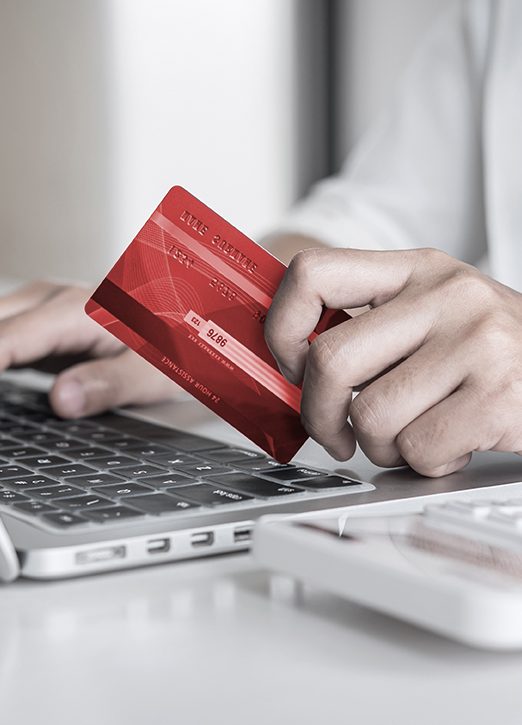
On the sidelines of this year’s World Economic Forum meeting in January at Davos, Switzerland, 76 Members of the World Trade Organization (WTO) expressed their intention to begin WTO negotiations on electronic commerce (e-commerce). Making up less than half of the WTO’s overall membership, these willing Members entreated other Members to join them in negotiating rules aimed at facilitating the use of e-commerce in trade.
All independent CARICOM Member States, with the exception of the Bahamas – which is presently acceding to the WTO – are WTO Members and therefore eligible to join these negotiations. However, so far none has done so. Given the potential of e-commerce for their development, should CARICOM Member States reconsider their cautionary stance?
Growing importance of e-commerce to global trade
E-commerce, also referred to as “digital trade”, has been defined as “the production, distribution, marketing, sale and delivery of goods and services through electronic and digital means”. In its World Trade Report 2018, the WTO noted that digital technologies – such as artificial intelligence, blockchain, the Internet of Things and 3-D printing – are reducing trade costs and revolutionizing the structure and patterns of global trade flows.[i] The United Nations Conference on Trade and Development (UNCTAD) estimated the global e-commerce market to be around US $22.1 trillion in 2015.[ii]
The WTO Report and numerous studies[iii] highlight the potential of e-commerce to catalyse economic transformation in developing countries by lowering trade costs, increasing market access opportunities for Micro, Small and Medium-Sized Enterprises and individual entrepreneurs, improving logistics, and widening consumer choice. Challenges, however, continue to plague the use of these technologies, including inadequate supportive policies, technology diffusion and regulation.
While more modern regional trade agreements – like the US-Mexico-Canada Agreement and even the CARIFORUM-EU Economic Partnership Agreement – include comprehensive digital trade chapters, the WTO, which was negotiated in 1995, still does not contain a multilateral agreement dealing holistically with e-commerce. Instead, separate disciplines affecting digital trade in goods and services can be found in the WTO’s General Agreement on Trade in Services, the General Agreement on Tariffs and Trade, the Agreement on Trade-Related Aspects of Intellectual Property Rights, and more recently, the Trade Facilitation Agreement.
The multilateral route: The WTO Declaration and Work Programme on E-Commerce
Multilateral discussions on e-commerce involving all WTO Members were launched in 1998 through the adoption of a Declaration on Global Electronic Commerce, and a Work Programme to examine trade-related issues related to global electronic commerce. The Work Programme has been continuously updated at most WTO Ministerial Conferences since 1998, the last one being the Buenos Aires Ministerial Conference in 2017. Under that Work Programme, the WTO’s main committees have been reviewing progress on discussions, with general oversight provided by the WTO’s General Council. Despite fits of activity, and some proposals by select countries, not much has yet been accomplished beyond a temporary moratorium on the application of customs duties on electronic transmissions and the formulation of a working definition of e-commerce.
Although the negotiation of a multilateral agreement or rules among all 164 WTO Members would be ideal, consensus among all Members has been difficult to achieve. This is in large part due to developing countries’ objections to what they consider to be ambitious proposals being pushed by developed countries. On the one hand, WTO developing countries, led by India and the African Group of countries, support completion of the more limited mandate under the 1998 Work Programme framework.[iv] On the other hand, developed countries, such as the US[v] and the European Union, advocate moving beyond mere discussions to actual negotiations to formulate rules aimed at increasing e-commerce opportunities in the twenty-first century. Where CARICOM stands is unclear as no CARICOM government has to date tabled a proposal on e-commerce at the WTO.
The plurilateral route: Joint Statements on Electronic Commerce at Buenos Aires and at Davos
Without an official WTO mandate to proceed with multilateral negotiations, some WTO Members have begun negotiations on a plurilateral basis, that is, without all WTO Members but among a subset of willing ones. The plurilateral discussions began when 71 Members signed a Joint Statement on E-Commerce in Buenos Aires in 2017, and was extended at Davos in January this year, when five more countries, including China, agreed to join the plurilaterals.
In their Joint Statement at Davos, the 76 signatories agreed, inter alia, to achieve “a high standard outcome that builds on existing WTO agreements and frameworks with the participation of as many WTO members as possible”.[vi] The willing countries also agreed to “recognize and [to] take into account the unique opportunities and challenges faced by members, including developing countries and Least Developed Countries (LDCs), as well as by micro, small and medium sized enterprises, in relation to electronic commerce”.
Should CARICOM countries participate in plurilateral negotiations?
As with the multilateral e-commerce negotiations, CARICOM countries’ have remained silent on whether they have an appetite for joining the plurilateral e-commerce negotiations. A number of factors could account for their apparent hesitation.
Firstly, CARICOM countries may be concerned about their capacity to engage in negotiations on an area of trade which is still relatively new and evolving, and their subsequent ability to implement in a timely manner any obligations undertaken. To allay such fears, it might be worth considering the approach to special and differential treatment taken in the Trade Facilitation Agreement, another WTO plurilateral agreement, where implementation is tied to a country’s capacity and the degree of technical assistance provided.
Secondly, some CARICOM countries may fear that participation in these negotiations will restrict their policy space, particularly their ability to regulate online traffic and cross border data flows, and attendant issues like data privacy and cybersecurity. They might also be wary of the revenue implications of agreeing to the proposed permanent moratorium on the imposition of customs duties on electronic transmissions.
A third possible red flag for CARICOM may be the reluctance of other developing countries in joining the negotiations. While China joined at the last minute, others like India and the African Group countries have adamantly declined, preferring to focus attention on the multilateral discussions.[vii] These countries argue that e-commerce is monopolised by multinational corporations and that gains from e-commerce will not be realized for developing countries if they are required to cede their regulatory and policy space.
Without a critical mass of developing countries involved in the negotiations, CARICOM countries’ ability to form coalitions with perceived “like-minded” countries may be circumscribed. That said, e-commerce is an area in which CARICOM countries have offensive interests given the predominance of services in their economies. It may well be that new coalitions will have to be built on the basis of a new alignment of interests.
Issues for Consideration
Given the importance of digital technology in global commerce, missing the e-commerce train at the WTO may not be in CARICOM’s best development interests. But CARICOM countries would be ill-advised to pursue a strategy to negotiations that ignores the following considerations.
Firstly, a negotiating strategy must be predicated on a sound digital trade policy that is informed by: data analysis of current patterns, scope and scale of e-commerce in the region; a clear-sighted appreciation of how e-commerce can promote the region’s overall economic transformation; and solid regulatory frameworks and infrastructure. Some studies, including one commissioned by UNCTAD on e-commerce legislation in Caribbean countries[viii], already exist.
Secondly, both the digital trade policy and the subsequent negotiating strategy will require the input and feedback of key stakeholders, including the private sector and regulators which will be tasked with administering any rules, and consumer bodies. Canada, which is one of the Joint Statement signatories, has already launched stakeholder consultations.[ix]
Thirdly, CARICOM countries must be tactical. They should consider reaching out to other similar-minded developing countries to join the ongoing plurilaterals negotiations, and increase the visibility of issues that are unique to smaller developing countries.
What Next?
As CARICOM ponders its next move, negotiations on the plurilateral front are ramping up. There is no agreement yet among those engaged in the plurilateral as to the legal structure any eventual agreement will take, nor as to its scope. But there is a willingness to move beyond the “exploratory” phase to actual negotiations. In fact, the first meeting of the plurilateral e-commerce negotiations is slated to take place on March 6.
That means that there is still an opportunity for all WTO Members to participate in these negotiations, and thereby influence their shape. The 70 plus signatories include the world’s largest trading economies which account for 90% of global trade.[x] As the rules negotiated will likely serve as the baseline for any future multilateral e-commerce deal, non-participation by developing countries would relegate them, once again, to the status of rule-takers. This is not an area in which CARICOM countries should leave their destinies in the hands of others.
[i] https://www.wto.org/english/res_e/publications_e/world_trade_report18_e_under_embargo.pdf
[ii] https://unctad.org/es/paginas/newsdetails.aspx?OriginalVersionID=1281&Sitemap_x0020_Taxonomy=Information%20and%20Communication%20Technologies
[iii] See for example Commonwealth (2017) https://books.thecommonwealth.org/e-commerce-and-digital-trade-paperback; WTO (2013) https://www.wto.org/english/res_e/booksp_e/ecom_brochure_e.pdf ; E. Humphrey et. al (2003) https://eprints.lse.ac.uk/3710/1/The_reality_of_e-commerce_with_developing_countries.pdf.
[iv] See link for a synthesis of some of the positions: https://www.wto.org/english/news_e/news16_e/good_17nov16_e.htm. For the Indian Government’s views see https://www.ictsd.org/bridges-news/bridges-africa/news/african-group-submits-proposal-on-e-commerce-ahead-of-wto and also for the African Group’s position: https://www.ictsd.org/bridges-news/bridges-africa/news/african-group-submits-proposal-on-e-commerce-ahead-of-wto
[v] See this link for a greater discussion on the diverging views of WTO members on the way forward: https://www.reuters.com/article/us-trade-wto-digital/some-wto-members-to-push-for-e-commerce-rules-as-broader-deal-fails-idUSKBN1E72YV
[vi] The link to the text of the Joint Statement on E-commerce of January 25, 2019 text is available on this webpage: https://www.wto.org/english/news_e/news19_e/dgra_25jan19_e.htm
[vii] See https://www.thehindubusinessline.com/info-tech/india-keeps-off-75-member-wto-e-comm-agreement-talks/article26093230.ece and https://www.livemint.com/politics/news/india-south-africa-others-skip-wto-negotiations-on-e-commerce-at-davos-meet-1548435856765.html
[viii] https://unctad.org/en/pages/PublicationWebflyer.aspx?publicationid=2084
[ix] http://www.internationaltradecomplianceupdate.com/2019/01/28/canada-launches-consultations-on-future-wto-e-commerce-negotiations/
[x] https://www.wto.org/english/news_e/news19_e/dgra_25jan19_e.htm
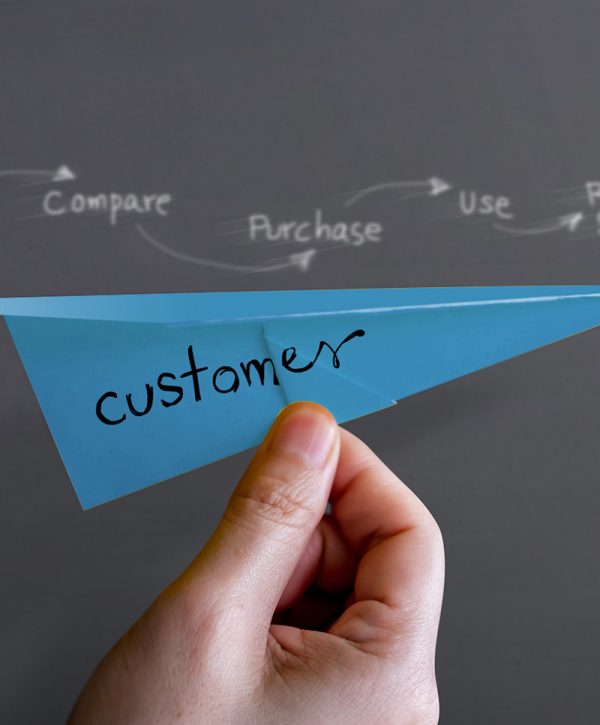
The world economy is going through major changes.[1] In the aftermath of the global financial crisis the process of economic globalization lost dynamism. By 2016, global cross-border capital flows had declined roughly 65% vis-à-vis the peak (of US$12.4 trillion) reached in 2007.[2] Foreign direct investment (FDI) flows also fluctuated significantly over the last few years and are still below the level achieved at the eve of the financial crisis. Trade in goods has also plateaued as a proportion of global GDP and in some years exports of goods increased below the expansion of world output.
These trends, however, do not hold in the case of services. Trade in services has not only increased as a share of global GDP, but also the services sector has become the main destination for FDI flows around the globe. The share of services in global trade is also increasing, reflecting the increased tradability of services in the digital era. Moreover, all over the world, but particularly in high-income economies, one observes the growing “servicification” of manufacturing activities, as services inputs embodied in the production process (e.g. R&D, design, and professional services), as well as services activities at the point of sale (e.g., financing, training, after-sales support), become increasingly important.
This trend towards the growing importance of the services sector in the world economy is now entering a new phase. Throughout modern history one can identify waves of innovation that marked the beginning of a new era. These “waves” are typically associated with so-called general purpose technologies (GPTs) that had dramatic implications for wealth creation, income distribution, jobs and wages. The steam engine (the lever behind the first Industrial Revolution, 1760-1830), electrification (the lever behind the second Industrial Revolution, 1870-1914), and information and communication technologies (ICT, the levers behind the current digital age) had significant impacts on productivity, international trade, and the economic structure of nations. The next “wave” of GPTs is centered around artificial intelligence (AI) technologies.
It is difficult at this stage to estimate the impact that AI will have on the labor market. This GPT, however, will affect both manual labor and cognitive activities. Concerns about a “robocalypse” are popular in science-fiction and in Hollywood movies. The reality, however, is that disruptions will be driven mainly by software and digital platforms based on AI. Productivity impacts may be exponential, but these innovations will tend also to foster income inequality and job displacement. Some of the policy solutions being discussed include the adoption of universal basic income schemes and the reduction of work hours as mechanisms to reduce the social impact of AI. These policies may help, but they raise a series of challenges in terms of financing and how to implement a new social contract.
There is a policy, however, which has broad support among researchers. This involves retraining the workforce with a view to explore new partnerships between humans and AI-based innovations. Such a strategy is inevitably services-intensive and it requires a rethinking of how education systems will adapt to this new world. A good example are the efforts of the Finnish government to train 1 percent of its population on the basics of AI. This effort is not designed to create a new generation of AI-software developers, but its aim is mainly to prepare Finland to the inevitable democratic debate on how to adjust to an AI-led economy.
For a country like Barbados, which is already a services-intensive economy, these discussions may look too esoteric for the population at large. Moreover, one could argue that Barbados’ comparative advantage is based on exports of services, like tourism, that have a strong human-veneer (a hotel receptionist, a bartender, …) and that are less likely to be affected by AI. The reality, however, is that in the AI-led economy, competitive advantage at the level of firms will be increasingly determined by the capacity of economic agents to work with these innovations. By leveraging AI-based platforms, Barbados can, for example, brand itself as an ideal place for matching compassionate caregivers with the growing international demand generated by the aging population of industrialized countries. In short, service-focused impact investments exploring generosity and volunteer activities will become an important source of dynamism in the AI-based era.[3]
[1] See, for example, Primo Braga, C.A., 2018, “Foreign direct investment and ‘peak globalization’”, Columbia FDI Perspectives, no. 230 (July).
[2] See Lund, S. et al., 2017, “The new dynamics of financial globalization,” McKinsey Global Institute (August).
[3] For a detailed discussion of such a proposition see Lee, K.F., 2018, AI Superpowers. New York: Houghton Mifflin Harcourt Publishing Co.
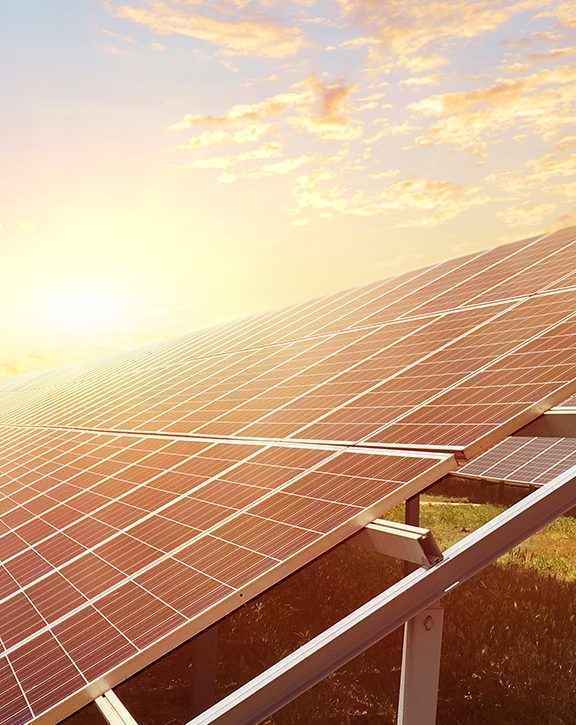
Increasing concerns related to energy security, global warming and climate change, depleting petroleum oil reserves, and the fluctuating price of oil have led to a demand for renewable energy resources. As a result, plant biomass has emerged as an abundant, low-cost, renewable, green energy option for conversion to fermentable sugars from which biofuels can be derived. “Also of particular interest are agricultural plants such as wheat, corn and sugarcane.
Currently, the USA and Brazil are the top two producers of biofuels in the world. Cornstarch is the major biofuel feedstock in the USA, while Brazil uses sugarcane juice. Together they account for 80-90% of biofuels produced globally. Despite this, they have received heavy criticism for direct utilization of food resources for this purpose.
Alternatively, non-food agricultural waste material such as bagasse generated from milling and processing of the sugarcane crop, can be used for the production of biofuels. Bagasse is composed of approximately 80% sugars, which when broken down, can be used to make biofuels. Additionally, other chemical compounds can be produced from the process inclusive of sugar alcohols, and carboxylic acids among other compounds that have market value. These are used as chemical building blocks, where they can be converted to a number of high-value bio-based materials. One of the more environmentally friendly and low energy methods used to derive fuels and other products from bagasse relies on biotechnology. Bacteria, in particular, are used for these purposes.
This approach opens avenues for the realization of an environmentally friendly and economically feasible strategy to convert sugarcane bagasse to bioethanol and other bio-products. Sugarcane is Barbados’ main agricultural and export crop where millions of tons of bagasse are accumulated annually.
However, Barbados has not implemented any specific plan to convert the bagasse component to fermentable sugars for the production of bio-compounds, inclusive of biofuels and other value-added compounds from which revenue can be generated. Nevertheless, Barbados is considered to have a high potential for biofuel from bagasse. The use of bagasse as a renewable resource to generate marketable bio-products is important to the diversification of the sugarcane product. The sugarcane industry can be further expanded to create not only sugar for local and international use but also for the production of biofuels for domestic use and speciality chemicals for export.
Domestic production and supply of biofuels can help in reducing the cost of importing fuels by supplementing local fuel demands as several models of vehicles are designed to carry an ethanol fuel mix. Speciality chemicals derived from renewable resources are in demand world-wide. This, therefore, presents a unique opportunity for a sugarcane producing country to such as Barbados to take advantage. Such chemicals are used in the pharmaceutical and polymer industries among others.
Our research efforts are focused on the utilisation of sugarcane bagasse as a substrate for bacteria isolated from bagasse, to produce fermentable sugars and other bio-compounds. This type of research is necessary in Barbados in order to explore the production of biofuels and commercially significant bio-products from bagasse.

The World’s Ocean is essential to life on our planet. It is the largest source of oxygen providing approximately 70% of the air that we breathe and absorbs around 25% of our carbon dioxide emissions. It is a source of food and sustains billions of livelihoods globally. It also provides coastal protection and is a vehicle for international trade while regulating weather and mitigating impacts of climate change.
Unfortunately, human activity is putting the health of this natural resource in peril. From habitat degradation caused by nutrient, chemical and plastics pollution, overfishing and unsustainable fishing to impacts of climate change such as rising sea levels, increased frequency and severity of extreme weather events, our Ocean is suffering.
However, there are many international, regional and national campaigns and initiatives that are placing the Ocean at the forefront.
Much of Nikola’s work revolves around promoting sustainable fisheries management and reduction of plastic pollution in the context of the Blue Economy. From chatting with youth to fisherfolk and other stakeholders, Nikola acts as an intermediary between the people and politics. She is inspiring society to make small changes that have big impact towards an environmentally sustainable and conscious Caribbean.
With the creation of the Ministry of Maritime Affairs and the Blue Economy* in Barbados in mid 2018, Nikola is hopeful of the action that Barbados and the Caribbean region will take to sustainably manage our Ocean resources.
[*The Blue Economy is generally described as the sustainable use of ocean resources for ocean ecosystem health, economic growth and improved livelihoods and jobs (adapted from EU). It covers established oceans-related sectors such as fisheries, maritime transport, shipbuilding and tourism as well as new and emerging industries, including renewable ocean energy and biotechnology].
As a country, Barbados has the potential to make our fisheries more sustainable, designate marine spaces as marine managed areas and to look towards marine biotechnology and renewable offshore energy which will help us to continue to build resilience to changes in climate.
As individuals, we can also play our role in sustainably using the Ocean’s resources. Here are some tips on how you can help:
If we protect the Ocean, it will continue to support and protect us.